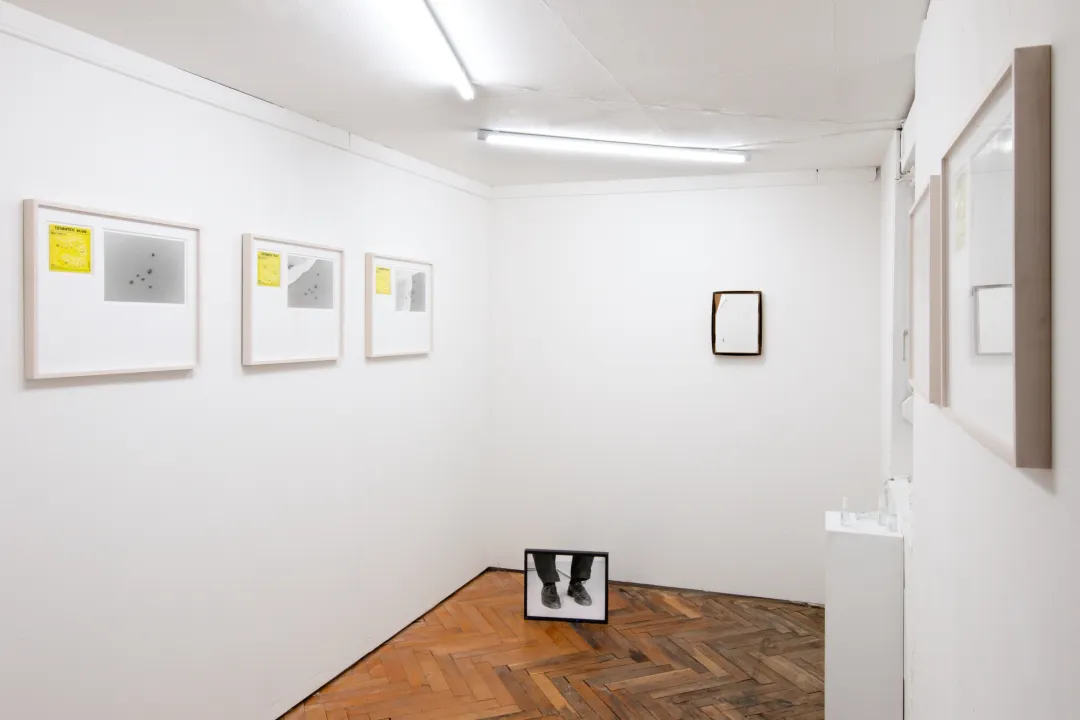
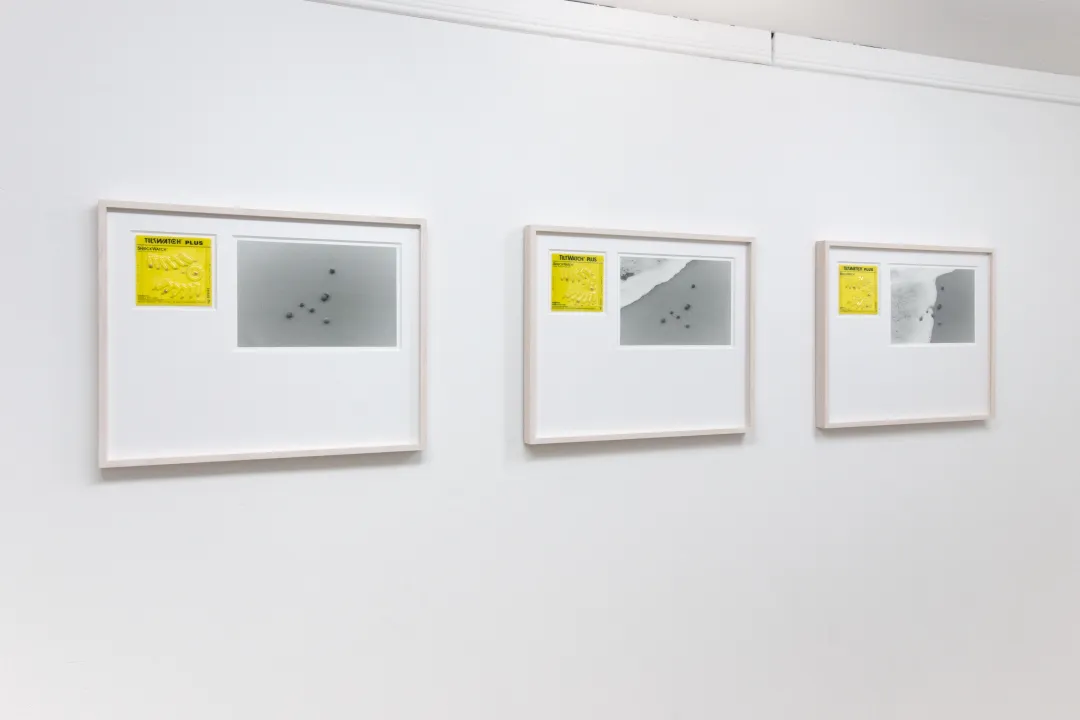
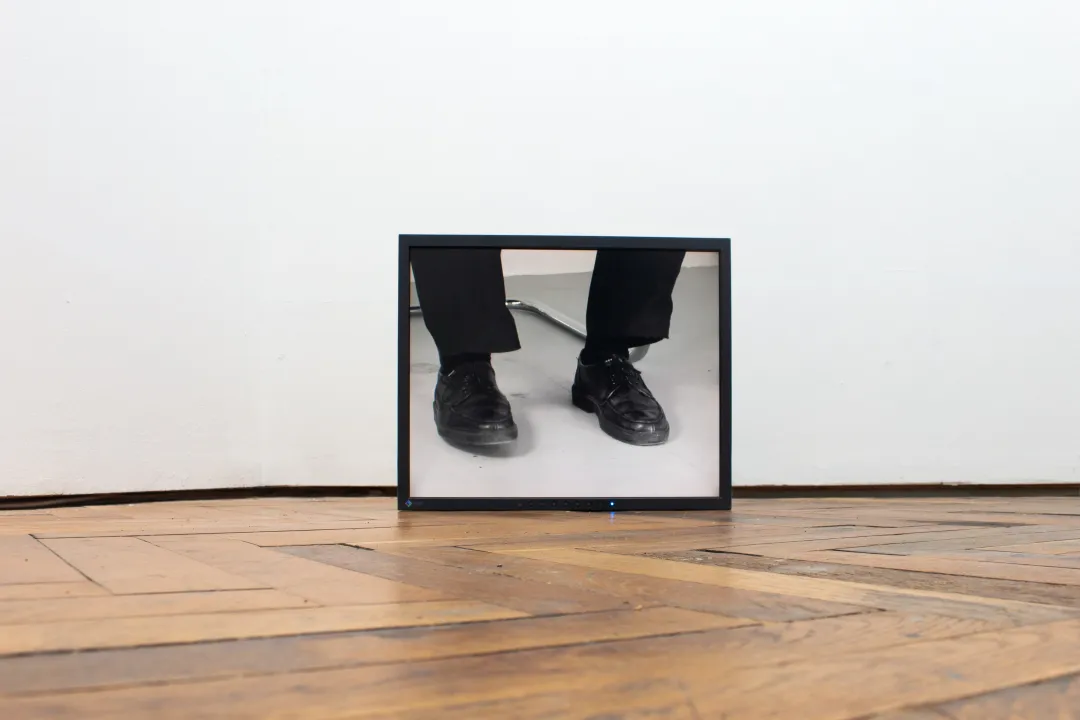
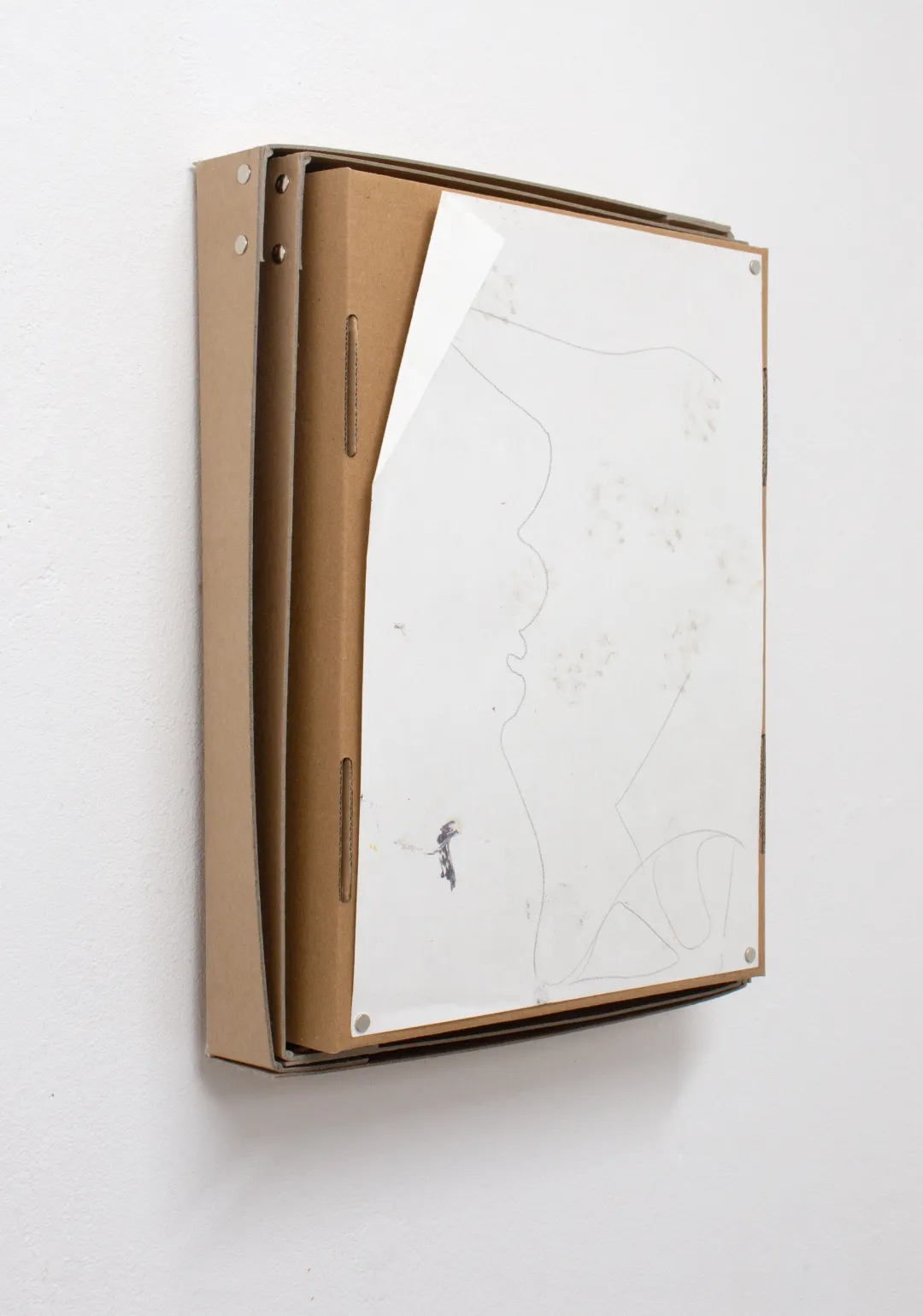
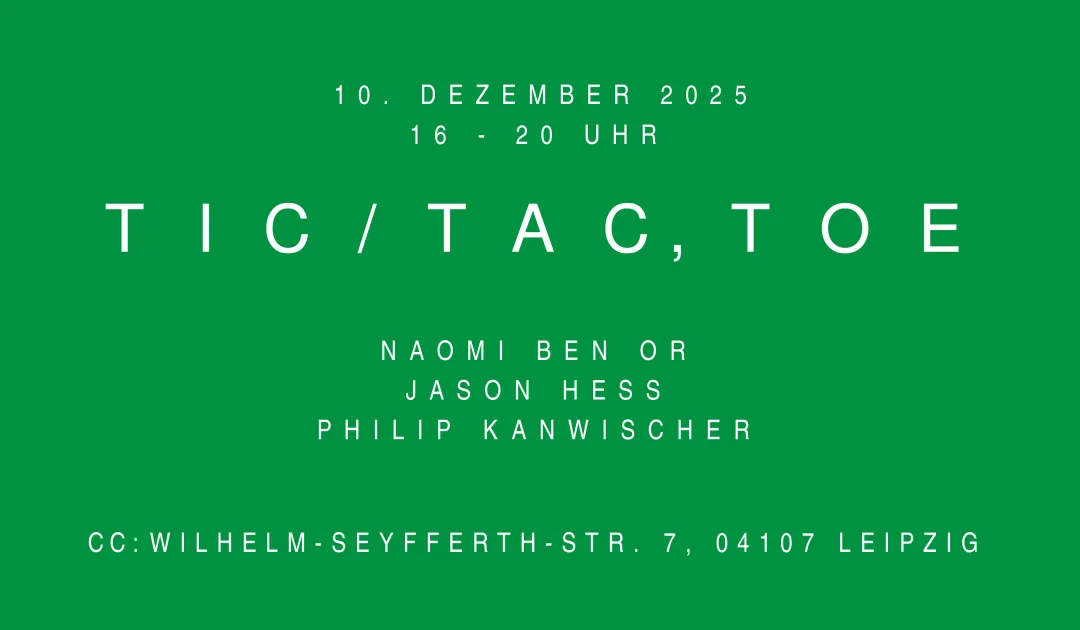
TIC/TAC, TOE (10.12.2025), Naomi Ben Or, Jason Hess, Philip Kanwischer
„I surreptitiously checked the time on my phone. Half an hour or so later, I dit it again, realizing only then that the gesture was absurd: I was looking away from a clock to a clock. […] while the duration of a real minute and The Clock’s minute were mathematically indistinguishable, they were nevertheless minutes from different worlds. I watched time in The Clock, but wasn’t in it“.
(Notes on The Clock by Christian Marclay, quote from the novel 10:04 by Ben Lerner, London: Granta Publications, 2015, pp. 53-54)
At the breakfast table, we talk about time perception. Art can pause time, he says, and I feel like disagreeing: But the viewer cannot escape time. Therefore I find the idea of art existing beyond time rather romanticized. Even the term time-based medium feels questionable, since every thing is based in time, moving through different stages and conditions. In my mind, there is a beautiful connection between the concept of time and acts of repetition, one that pleasantly demystifies time itself: by repeating an action again and again, each single gesture resembles both its predecessor and its following parts, channeling the present tense. Finding a routine in a repetitive movement can have effects eventually allowing you to enter a deep awareness of the now. Same, same, but different.
A subtle vibration emerges from the doubling of thoughts. It increases. And the shock wave continues, in the next tap of the foot, in the next drawn line, in the next approaching of the sea waves that have the power to create ever new constellations of reality.
I heard that in Zen Buddhist calligraphy the brush becomes some sort of tool for meditation. Each repeated stroke is executed with deep attentiveness, referring to inner sensations of the calligrapher’s mind; in their ongoing recurrence, the written signs serve as an expression of spontaneous energy signifying nothing more—and nothing less—than presence in the moment.
Why should you feel the need to escape time, when you could also own its measurements? Where, if not in artistic production, do you get the opportunity to observe, process and translate your perception of time in a way that differs from the common way of organizing by units like seconds, minutes and hours? In this environment, time rests in stains of the past, it hides in repetition, it multiplies in seriality, it rumbles in the white space and whispers in predictions of the future. Time strings become circles, they expand into space or split into parallel dimensions.
In an age of dematerialization and efficiency, the use of fictitious measurements can develop into an act of resistance. You are able to experience, if you dare to move. Repeat, repeat, repeat and disrupt orders you are not agreeing on. The tides are coming and going in their own rhythm anyway.
„I surreptitiously checked the time on my phone. Half an hour or so later, I dit it again, realizing only then that the gesture was absurd: I was looking away from a clock to a clock. […] while the duration of a real minute and The Clock’s minute were mathematically indistinguishable, they were nevertheless minutes from different worlds. I watched time in The Clock, but wasn’t in it“.
Text & Flyer Design by Yola Brormann
Photohgraphs by Tobias Bertz