Cye Cye (30.08.2026), Various Artists
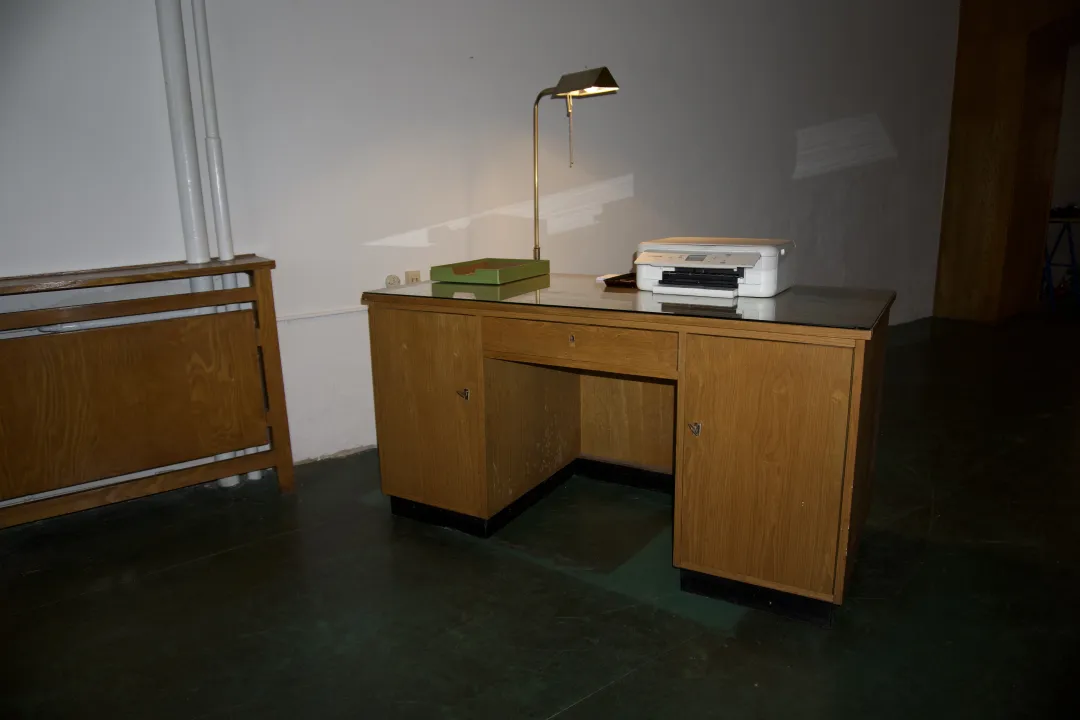
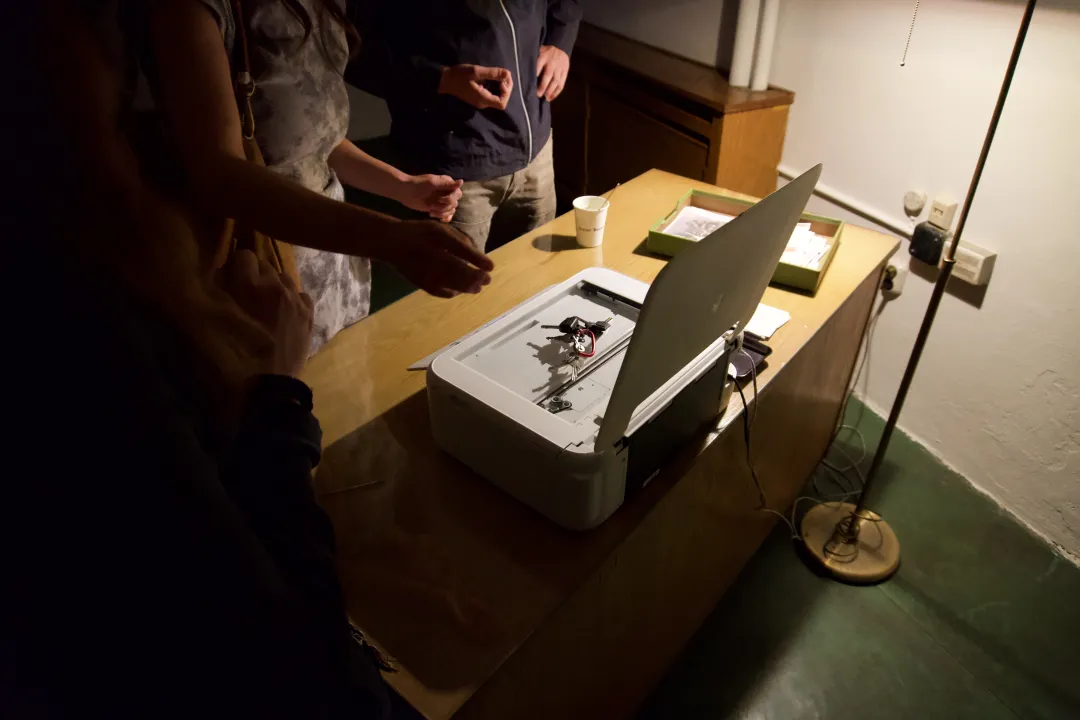
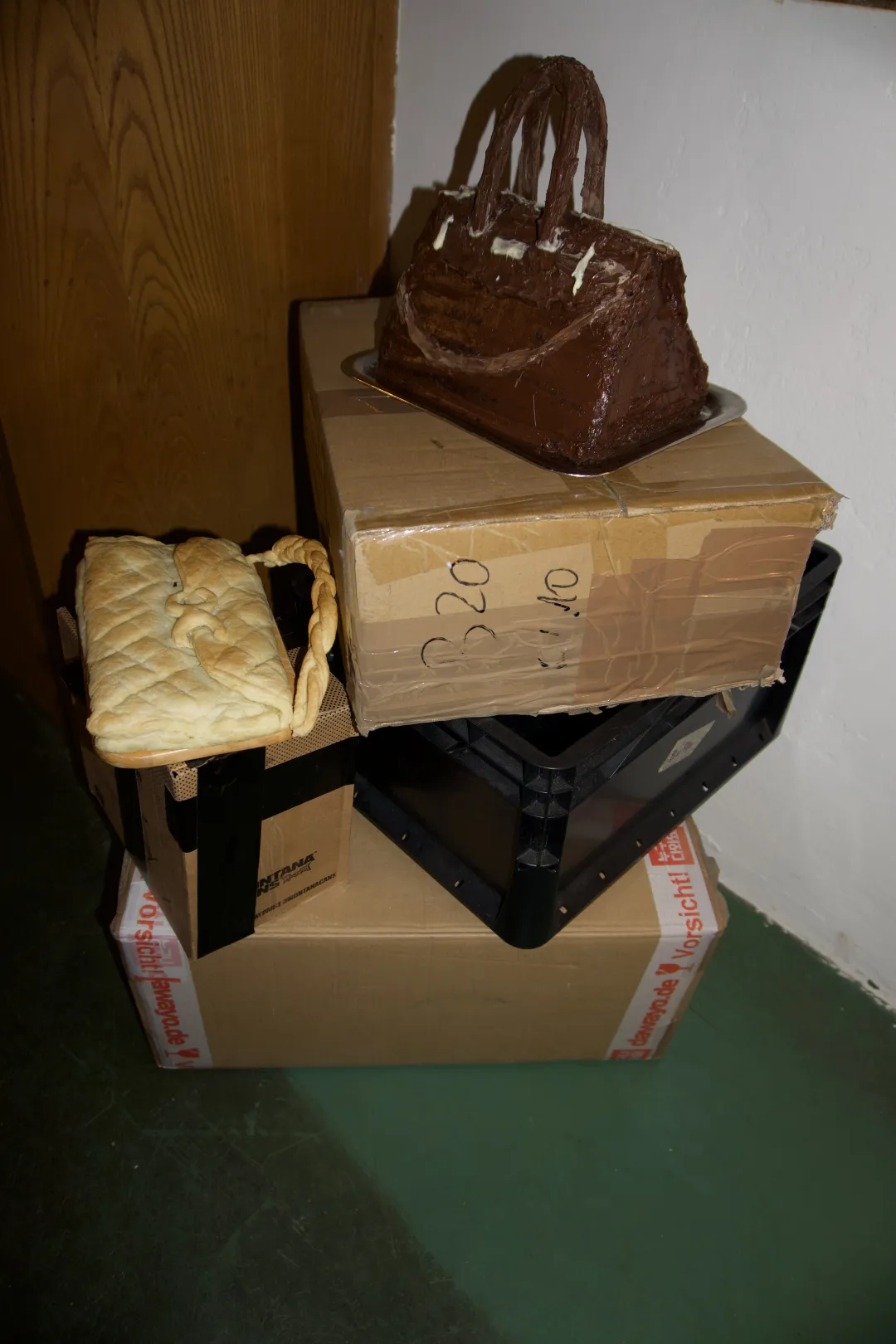
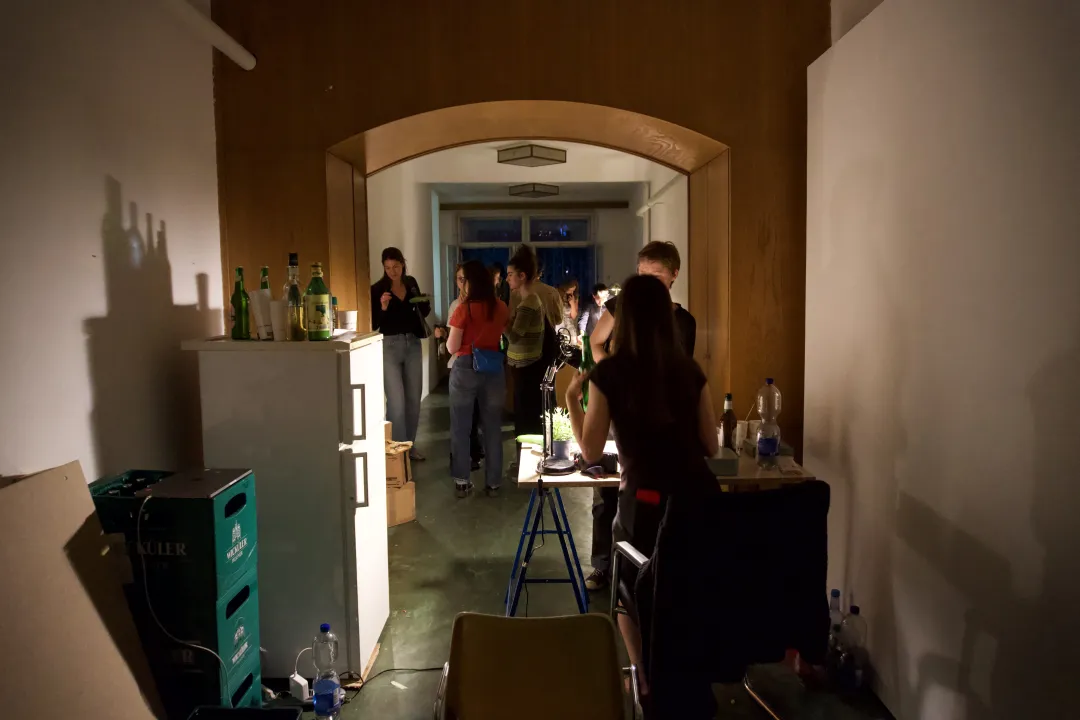
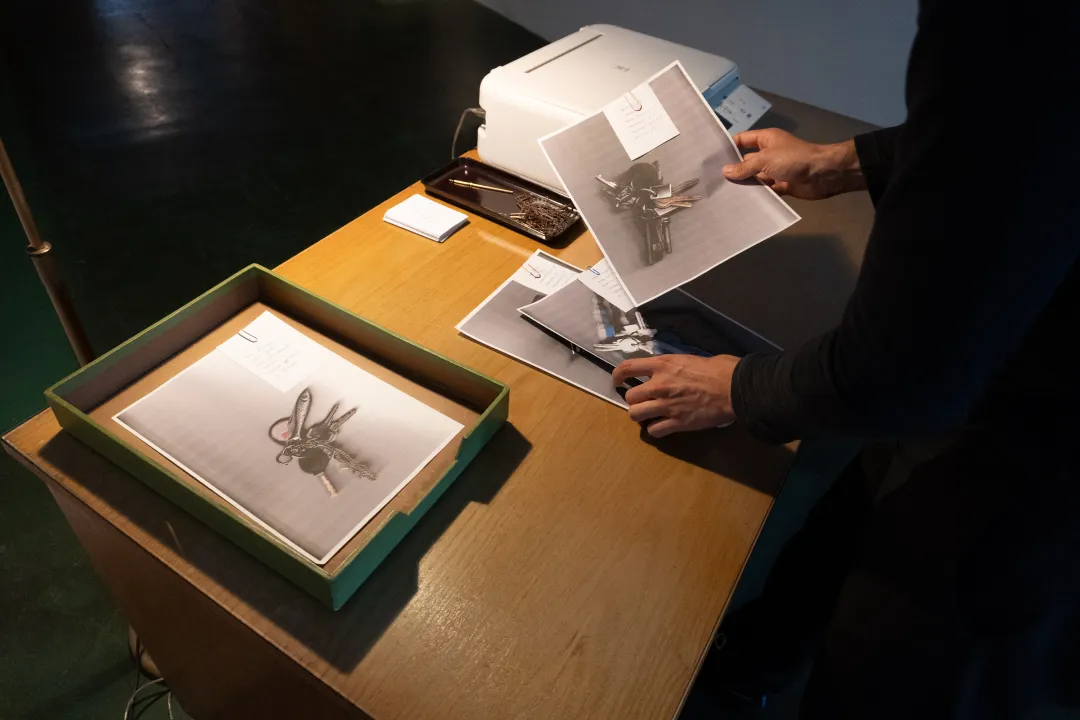
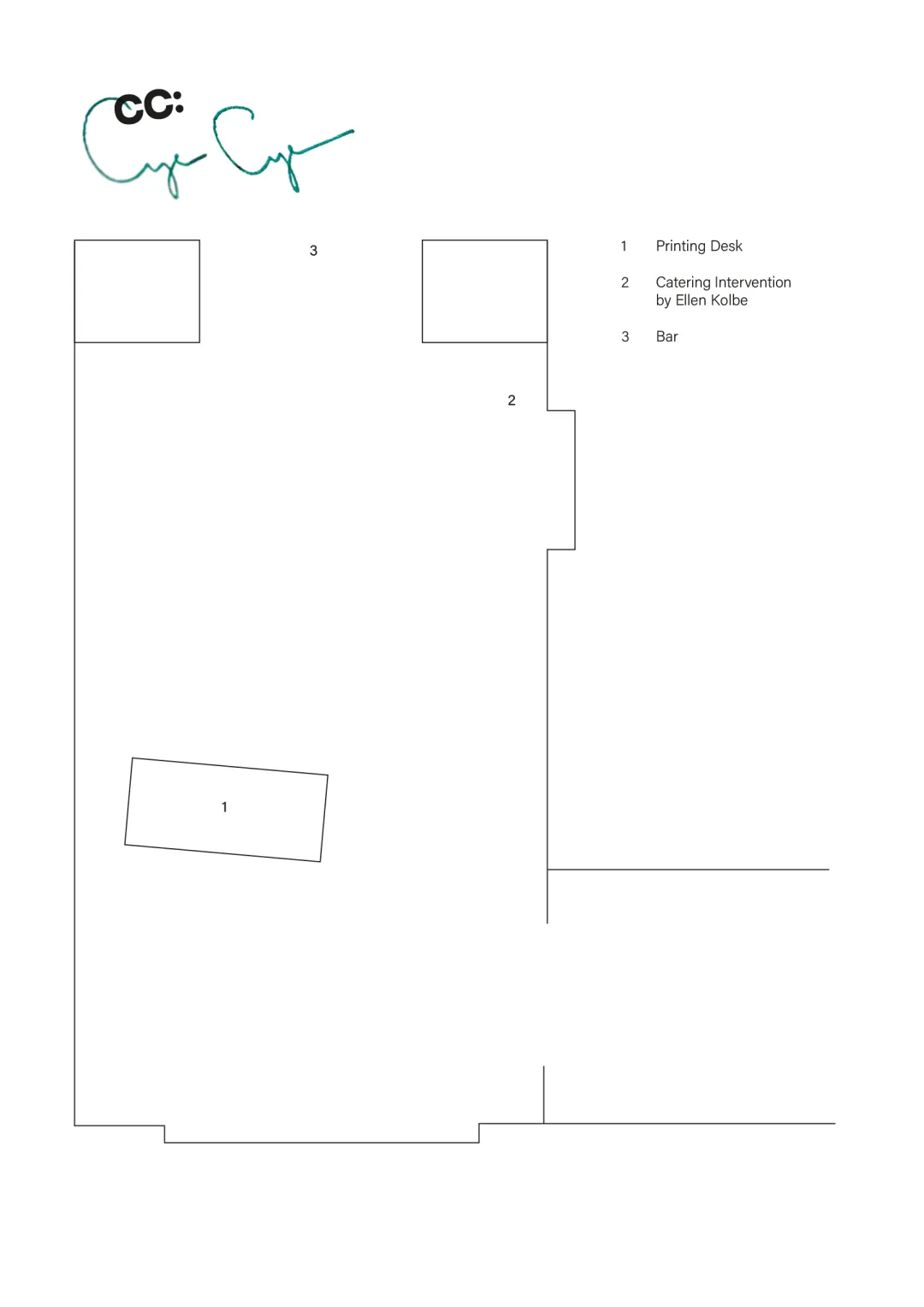
The red painted steel door downstairs is already open; I look for the switch to illuminate the entrance and make my way to the stairwell, where I walk past an old elevator toward the first floor, through the small foyer that smells of solvents, down the wooden staircase, where I’m standing now, in the middle of the exhibition space. I see my friends, who already gathered around an old desk. E. is holding a sheet of paper that he just pulled out of an office inkjet printer. Fuck, they didn’t ask me again, I think to myself. I try to find the bar to get a drink and move further into the gloomy room as I notice some cardboard boxes and packed luggage standing in a corner. Wow, this really is a farewell event. Between the boxes, there are a few designer bags, from Gucci to Hermès. No questions asked, they probably belong to some other art students with wealthy background.
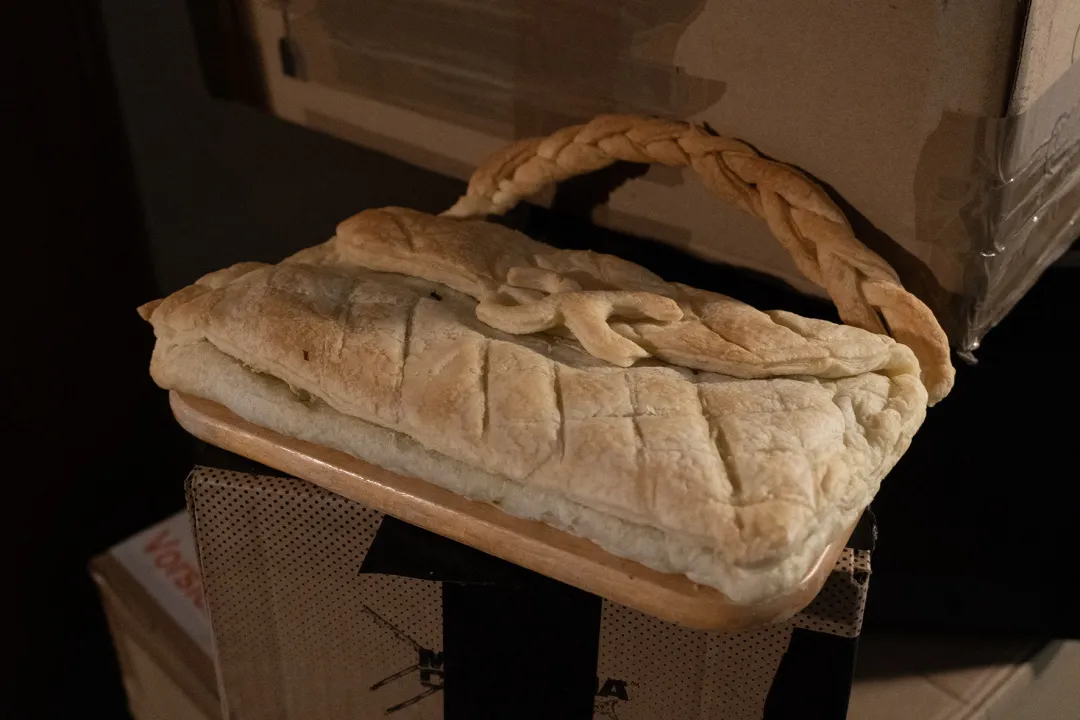
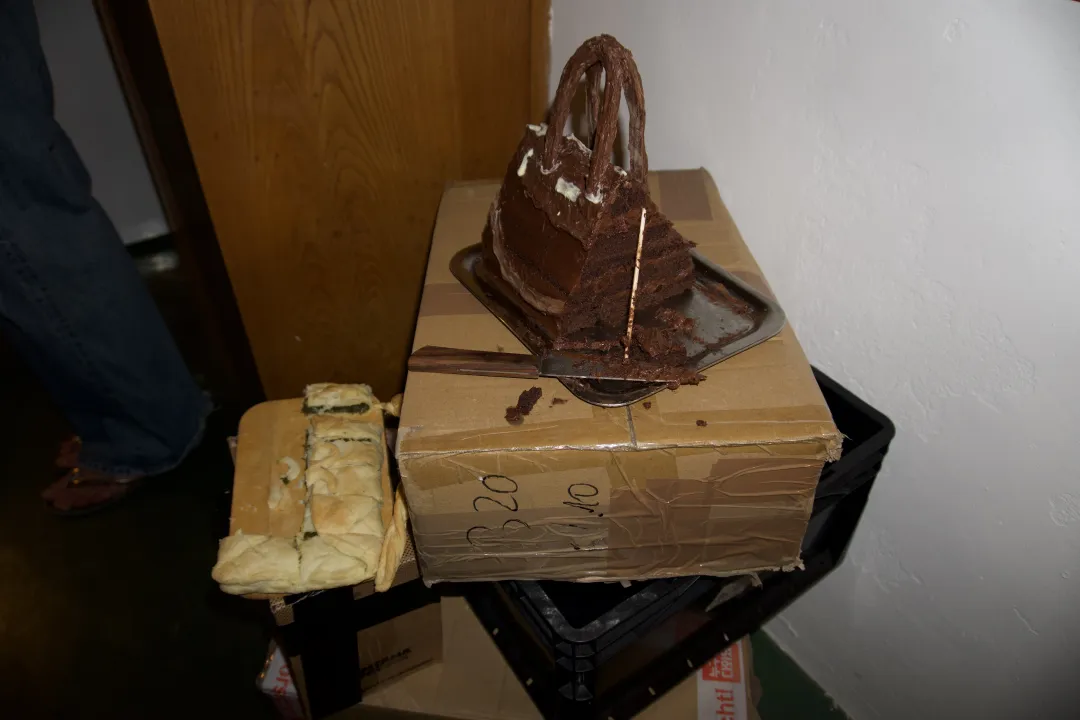
Later on, I notice that some of the bags have been cut in half. And for one cycle of digestion… I can call that Birkin Bag mine!
Visitors go to exhibition openings for various reasons. To look at art, chat with people, maybe sometimes to show off themselves to an audience or simply for having a reason to get a little drunk. One could say that, particularly since secularization and the emergence of postmodernism, the viewer has increasingly assumed a central role as the actual subject of art, as he is the is the one putting meaning into it. So Kunst liegt im Auge des Betrachters might be true in terms of interpretation, but it’s still the artist who decides what art is and what not. Listening to my inner Joseph Beuys, we are all artists, or at least have the potential to. I think about appearance, about how roles get shaped by individuals and how their roles shape them back. Sartre portrayed this by the figure of the waiter.
For artists, this categorization is a little harder, as there is no clear uniform or agreed-on behavior. Maybe there is an anti-uniform, defined by being everything but an uniform. There is rather lots of codes multiplied with each other, constantly changing, only legible to those who are part of this exact same field. The deeper you are in, the more greytones you are able to distinguish. These greytones are a capital, which is represented by language, clothes, an Instagram profile or even by the artworks themselves, etc.
Like little teeth on a key, the right combination of codes is able to open doors and will keep others locked forever.
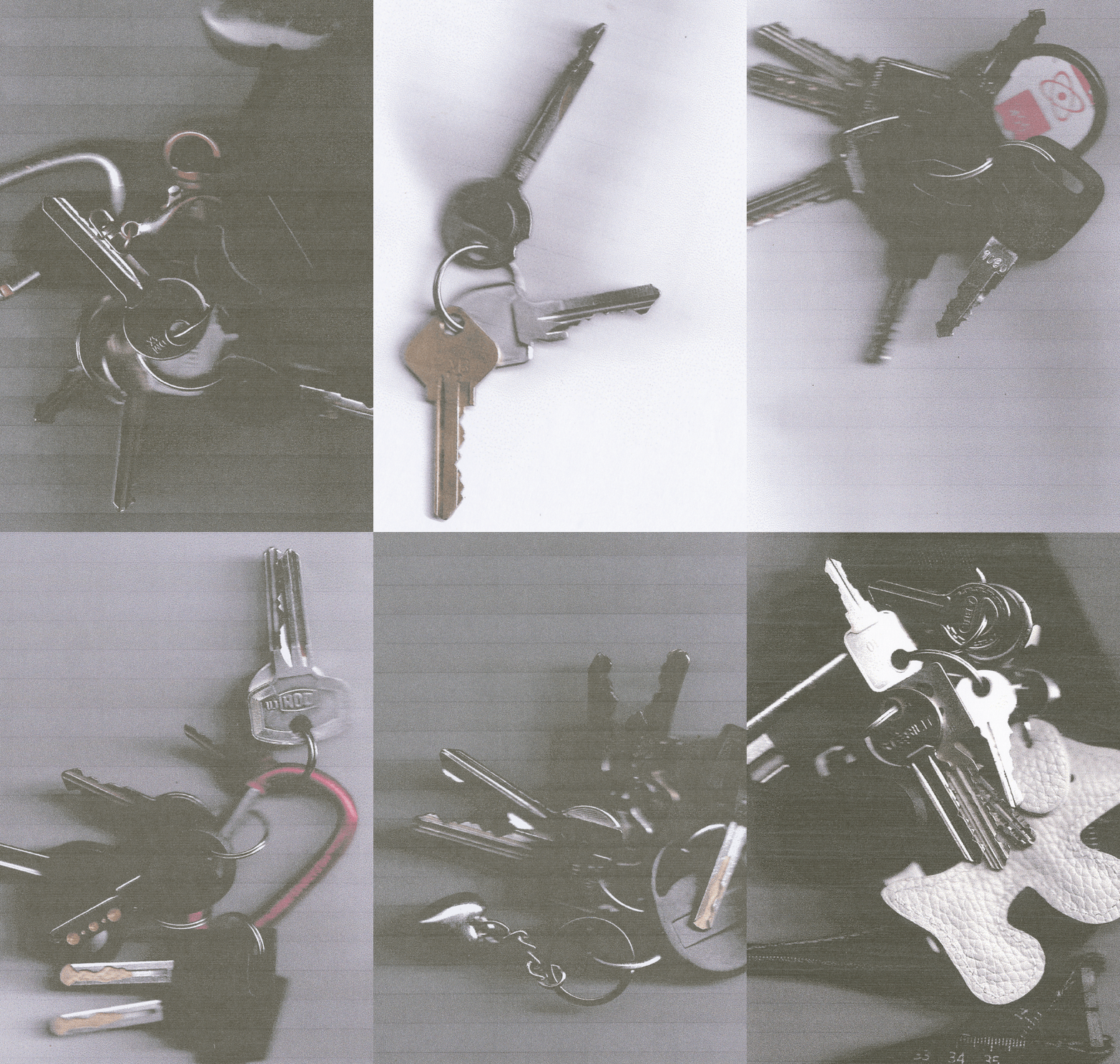
Right now, my personal keychain consists of a total of nine individual keys, a leather tag, and a black lanyard printed with an inch rule. I’m currently in the middle of moving, which is reflected in my keychain and makes it seem heavier for the time being than it usually is. In just a few days, I’ll be handing back some of the keys when the new tenant moves in.
The idea that this key, which I’m currently examining, used to spend every day in this (my) hand—as well as in various other hands and pockets before — starts to get my imagination running. I find myself thinking about my friends, about their interests and their choices in life, about what spaces they are able to get access to, and how all of this is embodied in their keychains.
____________________________________________
Participation is key (quite literally).
Cye Cye was initiated both as a farewell party and exhibition, given the reason that we are entering a nomadic exhibition practice with CC: and therefore leaving our space in Leipzig. The Cye Cye farewell party became a last moment of gathering and served as a platform to portrait all of those who have been part of the project as friends and guests. By asking to take part in an on-site installation, we invited the visitor, who is typically invisible and excluded in the documentation of a show, to become an actual subject – not just by looking at art, but by contributing something physical.
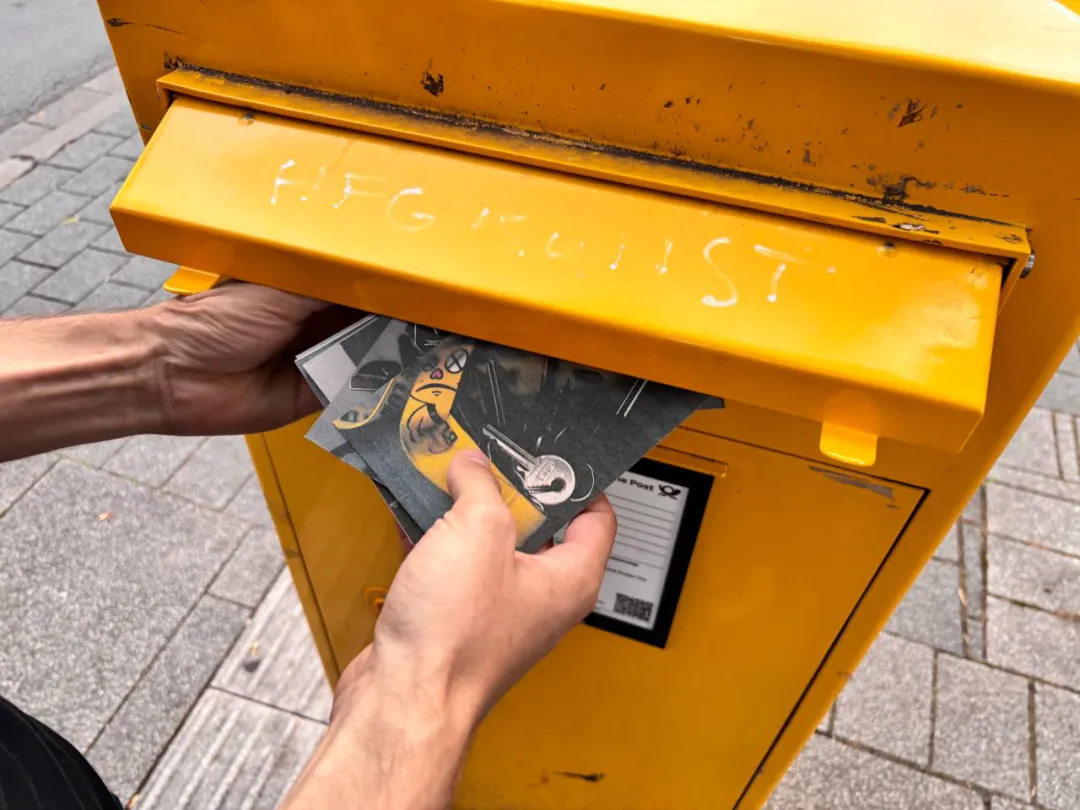
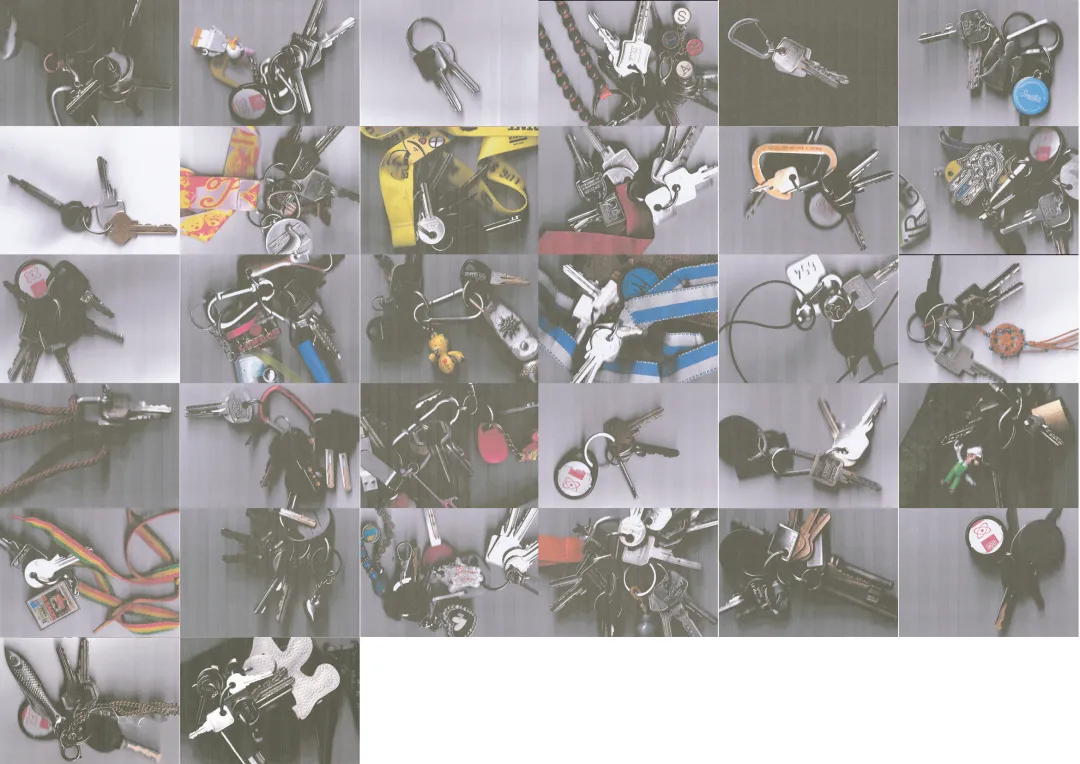
When entering the room, each person was welcomed to scan their personal keychain, and print it out with the inkjet printer sitting on the old desk we found in the room when we moved in. After the event, all scans were printed as A5 postcards in an edition of one per keychain. And as we handed the physical keys of our Leipzig location to its new tenants, our friends would simultaneously receive a postcard with another visitor’s key inside their mailbox.
The idea that this key, which I’m currently examining, used to spend every day in this (my) hand—as well as in various other hands and pockets before — starts to get my imagination running. I find myself thinking about my friends, about their interests and their choices in life, about what spaces they are able to get access to, and how all of this is embodied in their keychains.
Catering Intervention: Ellen Kolbe
Exhibition Text: Tobias Bertz
Documentation: Yola Brormann
With contributions by:
Gabriel Wintergerst, Elias Saile, Naima Amrain, Hanako Emden, Hannes Dömling, Milad Shahmoradi, Caro Scholl, Ferdinand Knöbl, Benjamin Friedle, Noa Moller, Yola Brormann, Samaneh Nikfard, Frida Mona Raabe, Jason Hess, Amalia Kuhlmann, Herr Nägele, Ellen Kolbe, Lion Mayer, Tobias Bertz, Alena Eisenmann, Mascha Schultz, Fedele Friede, Bat Nadiv Avital, Naomi Ben Or, Manon Kuschnig, Dilara Dinc, Jule Oberg, Janek Sänger, Felix Mahlknecht, Klara Marlene Fischer, Kolja Kärtner Sainz